01: Introducing ‘Wild World’
On my 60th birthday I was given a world map by my family. But this was no ordinary map. It was a beautiful handdrawn illustrated map of the natural world - the wild world. No humans, cities or man-made structures. Just nature and wildlife. And I learned that the map was the result of years of work by artist Anton Thomas.
Since my late teens I’ve been involved with environmental and conservation issues, qualifying as an Environmental lawyer in the early 1990’s. And I’ve always felt more comfortable, more at home in the natural world. I live on the wild Atlantic coast of Hartland Peninsula in North Devon, England and have mostly focused my travel and multimedia work on conservation and wildlife. Inspired by the Wild World map, I decided to start this journal to share my own ‘personal’ journeys in the natural world and the stories of the people and projects working tirelessly to protect and restore it.
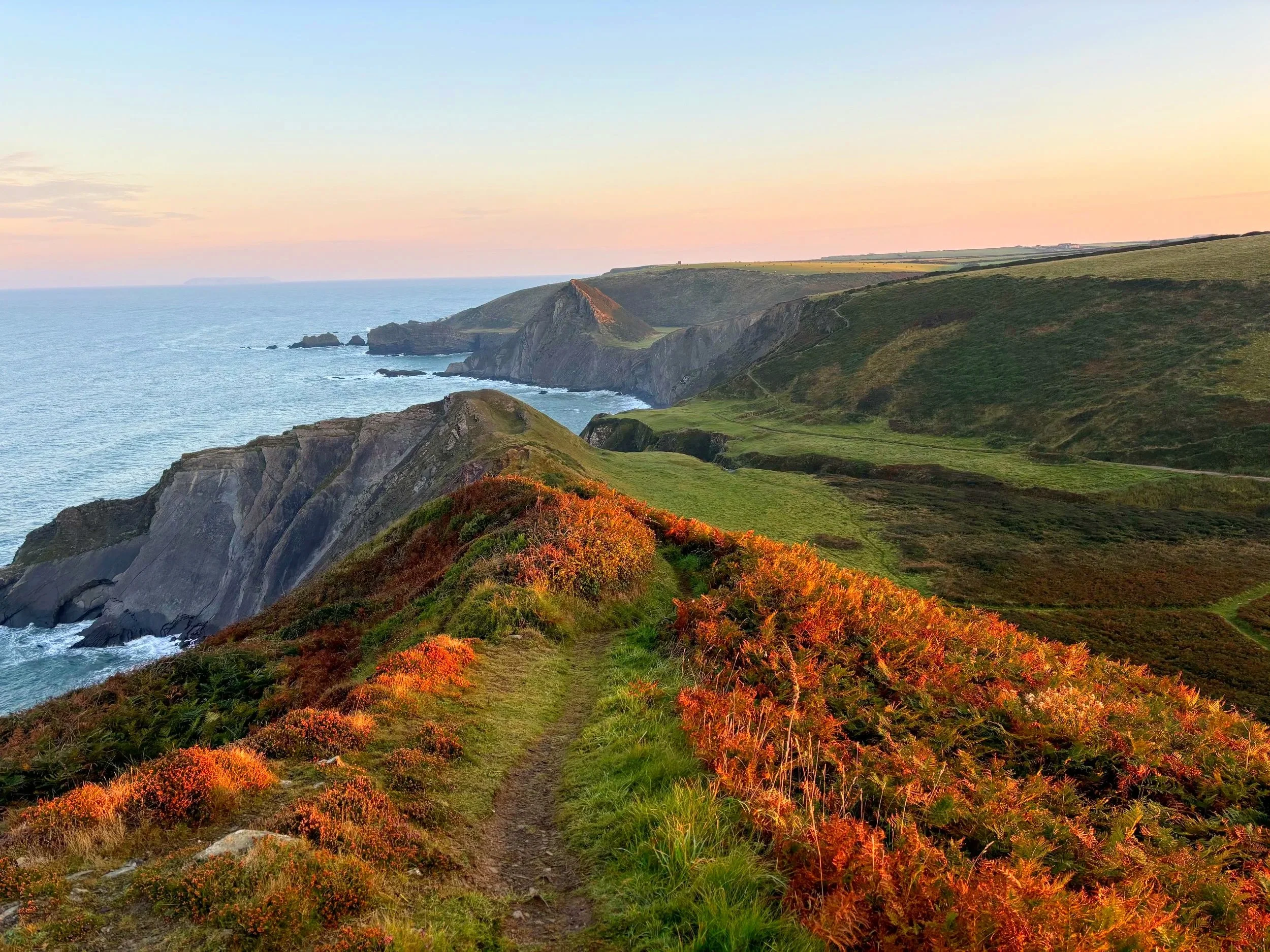
My daily walk along the South West Coast Path at Hartland Peninsula
Wild World
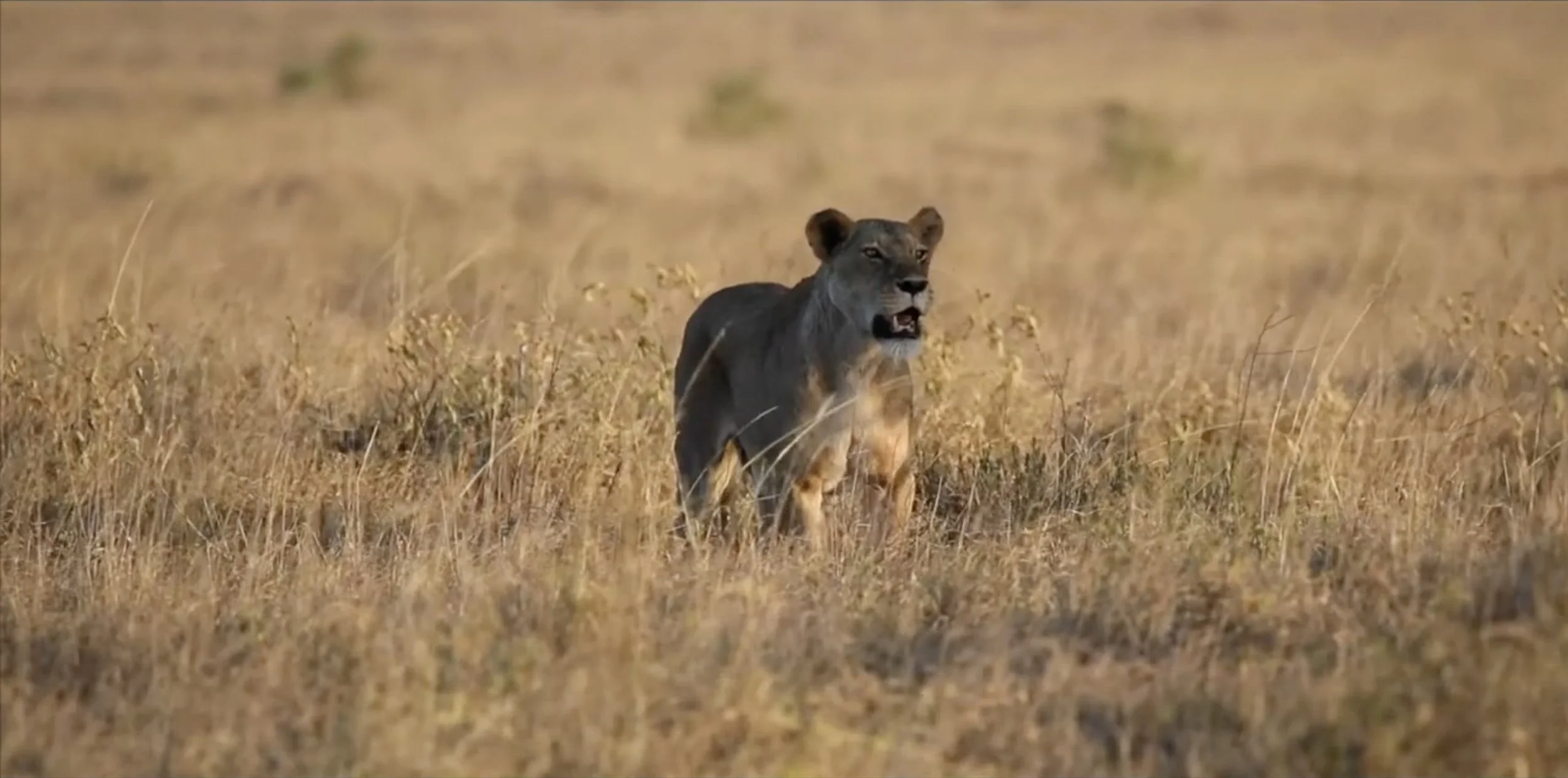
Lioness at Lumo Conservancy, Tsavo, Kenya © Rupert Bedford 2019
Being in the presence of a genuinely wild animal (particularly apex predators, charismatic megafauna and flagship species) in its natural environment is a thrilling, often profound, experience and a special privilege. More often than not it takes a great deal of planning, patience and persistence along with an element of discomfort and a dose of good luck. No ‘baited’ photography hides or ‘chum feeding’ boat trips for me. And, from a conservation perspective, it presents an opportunity to reflect on and highlight the importance of protecting truly wild spaces and species for a healthy, biodiverse planet.
In planning my Wild World trips I keep in mind the criteria used by Anton Thomas in selecting the 1,642 animals that feature in his Wild World map. In his accompanying guide to the map, Anton explains his approach…
“I gravitate toward beautiful, unique and iconic animals. But I settled on three criteria that came to shape the philosophy of the map. All animals in Wild World are (1) wild (no domesticated creatures), (2) native (no species introduced by humans), and (3) extant (not extinct). Wild and native animals evoke natural biomes only— pristine habitats without domesticated or introduced species. Meanwhile, extant animals set the map in the present day. This is crucial— Wild World is a place that still exists; a world that can still be cherished and protected. It may seem an idealistic view of Earth, but it shows nothing that isn’t here now. Every species, every habitat, is still with us. I want this map to inspire hope, to show just how wild the world still is, how much there is left to preserve.”
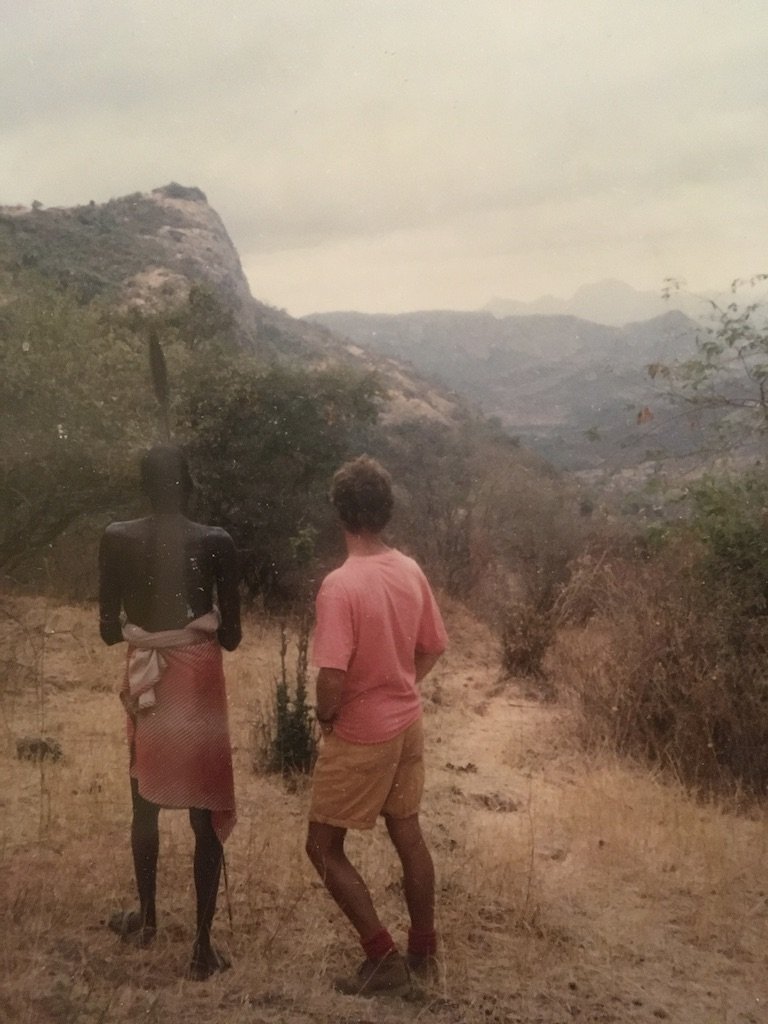
Me (in my youth!) with Maasai Guide on a desert trek in Northern Kenya.
Travels in Nature
Hiking in the natural world is a truly wonderful thing
I’ve been fortunate enough to do quite a bit of travelling over the years, and the focus of my trips has generally been on experiencing our natural world. I have trekked in the Rwenzori ‘Mountains of the Moon’ in Uganda, in the Annapurna region of the Himalayas, and in the deserts of Northern Kenya. And Scuba-dived all over the underwater world. Closer to home I have walked Coast to Coast from North to South Devon and covered hundreds of miles along the beautiful South West Coast Path.
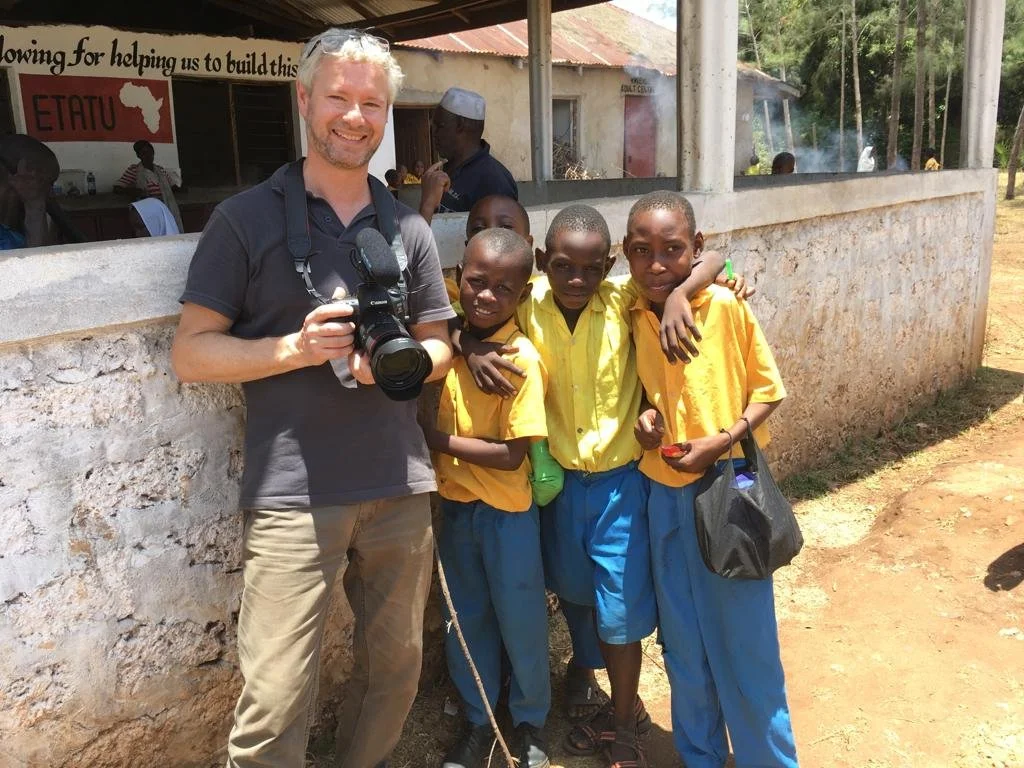
Filming in Kenya 2019 © Rupert Bedford
Media for Conservation
Africa is a continent I’ve visited many times - producing media about community wildlife conservation in Tsavo, Kenya (Fragile Sanctuary) and mangrove conservation projects on the Kenya coast (Blue Forest). More locally in the UK, my projects include a story celebrating Devon Wildlife Trust’s goundbreaking project to reintroduce Beavers into the wild in England Beavers Return, and a film portrait of our local Spekes Valley Portrait of a Valley. Videos include Puffins Return about the return of Puffins and other seabirds to Lundy Island following the success of community conservation measures, and Boosting Local Biodiversity highlighting the importance of reducing the use of agricultural and domestic pesticides.
Click here to view a Vimeo showcase of some of my Wild World films and videos.
My Walking Videos – ‘Slow Journalism’
It is said that a ‘picture paints a thousand words’ and I curate my walking videos with this in mind. These videos are intended as both an ‘aide-memoire’ and a kind of ‘slow journalism’ meditative experience. No commentary, descriptions, explanations or distractions. Just sights and sounds. The idea is to simply capture a real-time, in-sequence, unedited essence of the trail, the journey and the place – its wildness, its nature, geography, geology and scenic beauty. And in a way that might serve as a catalyst for the curious to find out more…
Out on the trail, it is the meditative rhythm of the footstep, the birdsong, the dynamic contrasts of loud and soft sounds, the crashing of the waves and other sounds of nature that make it such a rich experience for the soul. And it is these elements that I try to capture the essence of in my videos —although my camera is put away (out of sight and mind) for most of the time in order that I can be fully present.
With the kids having ‘flown the nest’ and the body still holding up (just!), I’ve embarked on a new set of travels (light and ‘low carbon’) to the wild world— walking wild trails, searching for amazing wildlife and meeting the people working hard to protect it.
I hope you enjoy my new multimedia Journal; ‘Wild World’
Rupert B.